The Glidepath
"Own your age in bonds" is a starting point, not a law. (A common rule of thumb.)
A glidepath is simply a plan for how your asset mix shifts over time. The conventional one slopes downward: hold mostly shares when young and your horizon is long, then steadily move towards bonds and cash as you near and enter retirement. Old rules of thumb — "own your age in bonds", or "equity share equals 110 minus your age" — capture the idea.
The logic is sound. With fewer working years left to recover, a large fall close to retirement is hard to come back from, so you trade some growth for stability.
But it is not the only respectable view. Because retirements can last thirty years or more, some researchers argue a falling glidepath can leave you too cautious late on — exposed to inflation and longevity risk. A few even favour a gentle rising equity path through retirement.
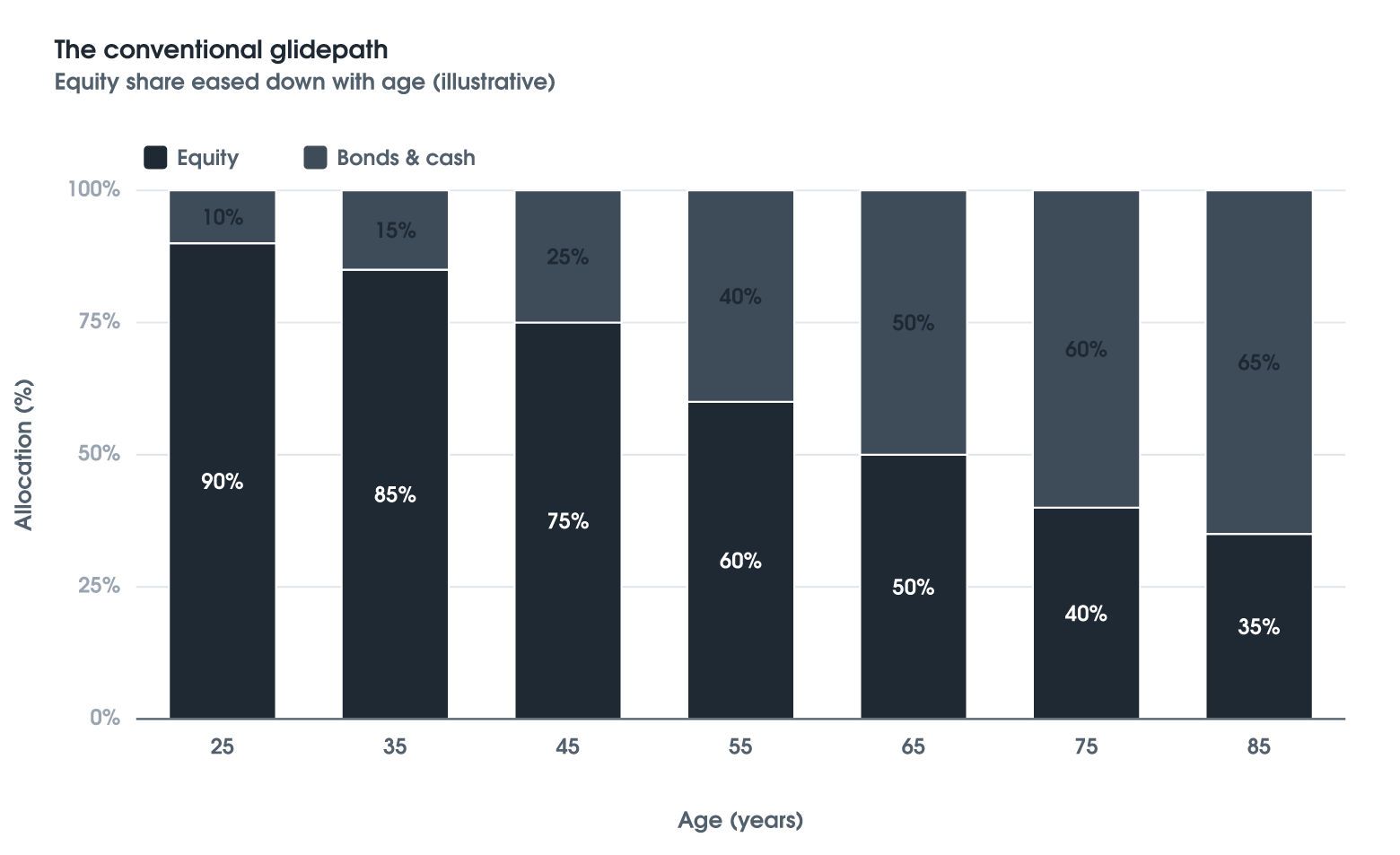
Illustrative example: the standard slope
The chart shows the conventional downward glidepath — a high equity share in the working years, easing towards a more balanced mix by retirement. Treat it as a default to adapt, not a track to follow blindly: your own mix should reflect your spending needs, your other income (a CPF LIFE payout is bond-like), and how much market swing you can stomach.
The point is to decide the path deliberately, in advance — not to drift, or to lurch in reaction to a bad year.
Educational only — not financial, tax, or investment advice, or a recommendation to take any particular course of action. Any names, figures, and examples illustrate a principle and are historical or simplified; past performance is not a reliable indicator of future results. Rules, tax treatment, and published figures change over time and may not reflect current policy. Wealth Diagnostics provides education and tools for financial advisers and their clients — seek licensed advice for your own circumstances before making any financial decision.