Sequence-of-Returns Risk
While you are saving, the order of good and bad years barely matters. Once you are drawing an income, it matters enormously. (Wade Pfau's "retirement risk zone".)
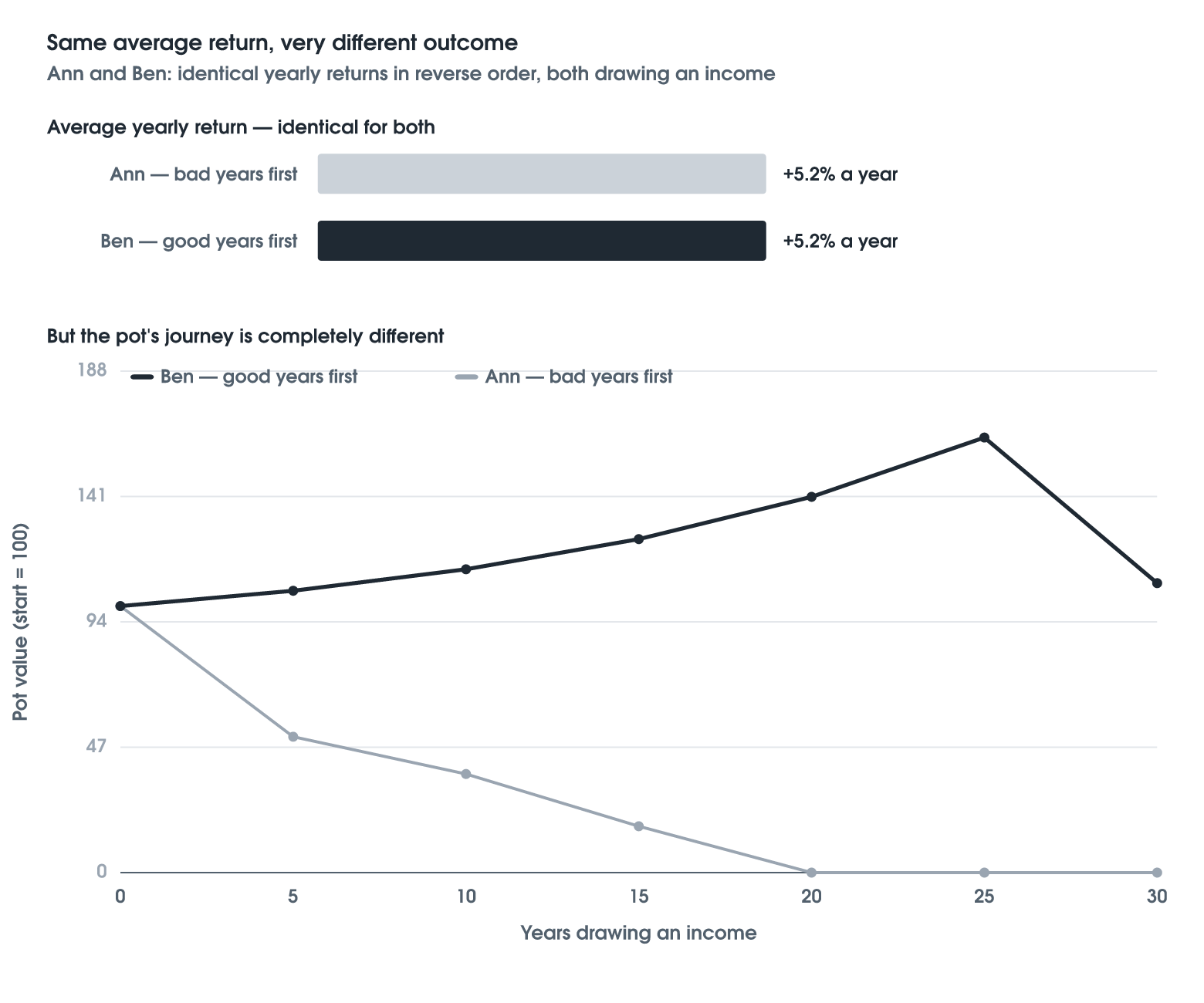
Here is the idea through two people. Ann and Ben each retire with the same savings and live through the very same ten years of market returns — the same gains, the same losses, the same average. The only difference is the order: Ann's bad years land first, Ben's land last. Think of it as the same playlist of songs shuffled into a different order.
While you are still saving, that order makes no difference. Reshuffle the same returns and you finish in exactly the same place. The moment you start withdrawing money to live on, everything changes.
Because Ann meets her bad years first, she must sell investments to fund her spending while prices are down. Every withdrawal in a slump locks in a loss and leaves less capital to recover when markets rebound. Ben, enjoying good years first, draws from a growing pot and builds a cushion that carries him through his later bad years. Same average return — yet Ann can run dry while Ben sails through.
This is sequence-of-returns risk, and it bites hardest in the "retirement risk zone": roughly the five years either side of the day you stop work.
Illustrative example: same average, different order
The top of the chart shows the crucial fact — Ann and Ben earn the identical average return. The lower panel shows what becomes of their pots once they start drawing an income: same average, yet one pot endures comfortably and the other is exhausted. The defence is not to predict the order, but to hold a few years of spending in safer assets, so a bad early run never forces you to sell at the bottom.
Educational only — not financial, tax, or investment advice, or a recommendation to take any particular course of action. Any names, figures, and examples illustrate a principle and are historical or simplified; past performance is not a reliable indicator of future results. Rules, tax treatment, and published figures change over time and may not reflect current policy. Wealth Diagnostics provides education and tools for financial advisers and their clients — seek licensed advice for your own circumstances before making any financial decision.