Riders, Deductibles and Co-Payments: What Changed in 2026
A small bill you can feel keeps everyone's premiums lower. That is the whole point of a co-payment. (Why some cost stays with you.)
An Integrated Shield Plan leaves you with two out-of-pocket pieces on a claim: the deductible — the first slice, from S$1,500 to S$3,500 a year depending on ward class — and co-insurance, a percentage of the bill above it. Riders are add-on policies that shrink these pieces.
Why leave any cost with the patient at all? Because cover that pays everything removes the brake on spending — patients and providers both reach for more when nothing is at stake. A small co-payment is that brake, and it keeps premiums lower for everyone in the pool.
The rules tightened from 1 April 2026, and three points matter. First, the minimum 5% co-payment stays. Second, the annual cap on that co-payment rose from S$3,000 to S$6,000, so the most you pay in co-insurance in a year is higher. Third, and most important, new riders may no longer cover the minimum deductible.
In plain terms: you can still buy a rider to soften a large bill, but you can no longer reduce your share to zero. Some amount of every hospital stay is now yours to pay, by design. The deductible and co-payment can still be met from MediSave, within withdrawal limits — the change is about behaviour, not about removing help.
These figures and rules are current as at June 2026 and were among the most recent changes to Singapore's health insurance. Because they are so new, it is worth confirming the details against the Ministry of Health before acting.
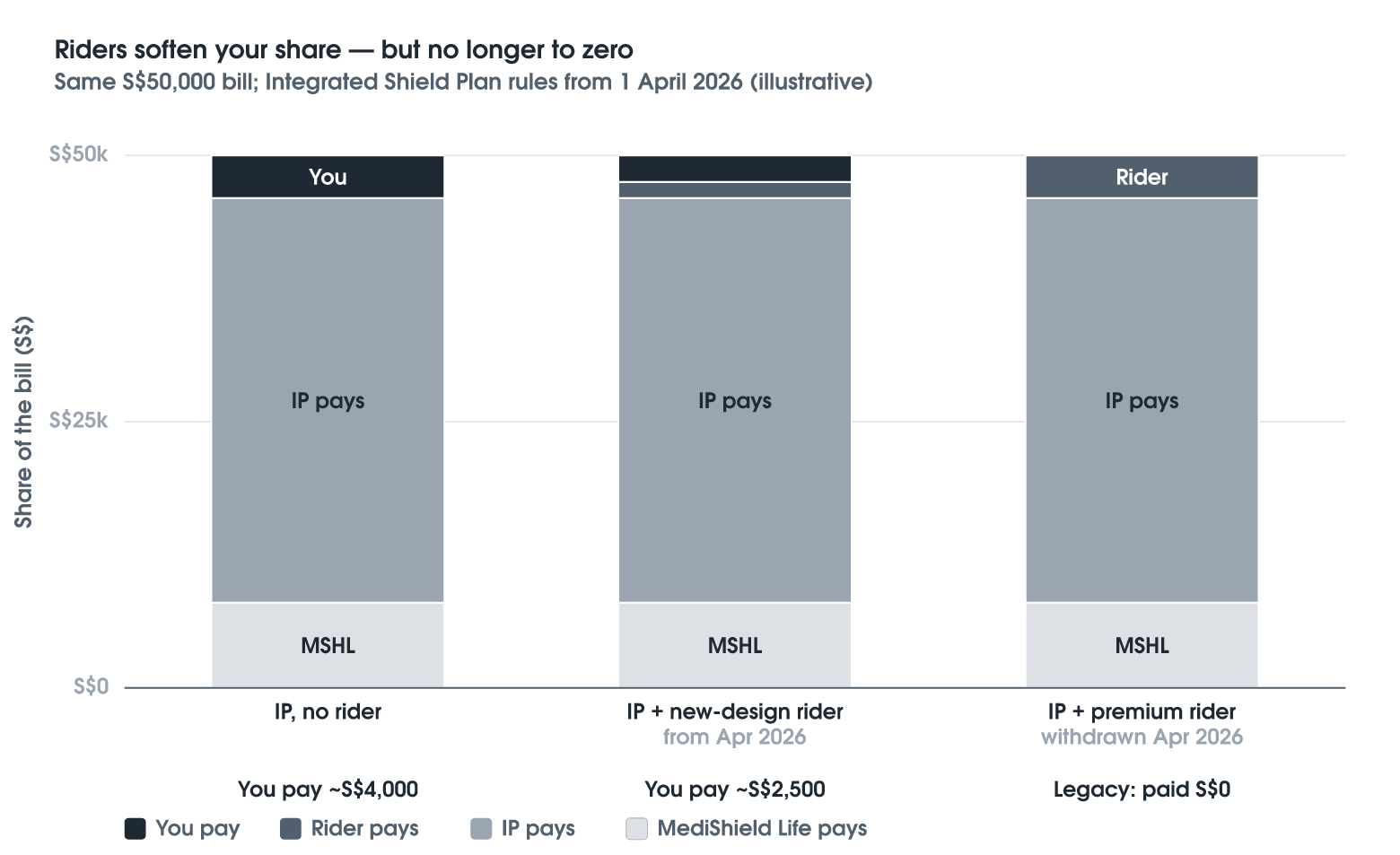
Illustrative example: how a bill splits
The chart holds the bill steady and changes only the rider. With no rider you pay about S$4,000; a new-design rider softens that to around S$2,500; the old premium rider could take it to zero — but that type was withdrawn for new buyers on 1 April 2026. Some share of every bill is now yours by design. The app's analyser shows the same geometry for your own plan.
Educational only — not financial, tax, or investment advice, or a recommendation to take any particular course of action. Any names, figures, and examples illustrate a principle and are historical or simplified; past performance is not a reliable indicator of future results. Rules, tax treatment, and published figures change over time and may not reflect current policy. Wealth Diagnostics provides education and tools for financial advisers and their clients — seek licensed advice for your own circumstances before making any financial decision.