Pay Yourself First
"A part of all you earn is yours to keep." — George S. Clason, The Richest Man in Babylon (1926)
Most people save what is left after a month of spending — and most months, very little is left. "Pay yourself first" simply flips the order: you set aside savings the instant your pay arrives, then build your spending around what remains.
The idea is almost a century old. In The Richest Man in Babylon, George Clason put it as keeping a fixed share of everything you earn before any bill is paid. Robert Kiyosaki later made the same rule a centrepiece of Rich Dad Poor Dad — paying yourself before the landlord and the tax man, precisely because it forces the rest of your finances into line.
Why does reversing the order matter so much? Because spending expands to fill whatever is available. If savings come last, they get crowded out by a hundred small, reasonable choices. If they come first, your spending quietly shrinks to fit — and you barely feel it.
The mechanism that makes it stick is automation: a standing transfer on pay-day, into an account you do not touch. Willpower is taken out of the loop entirely.
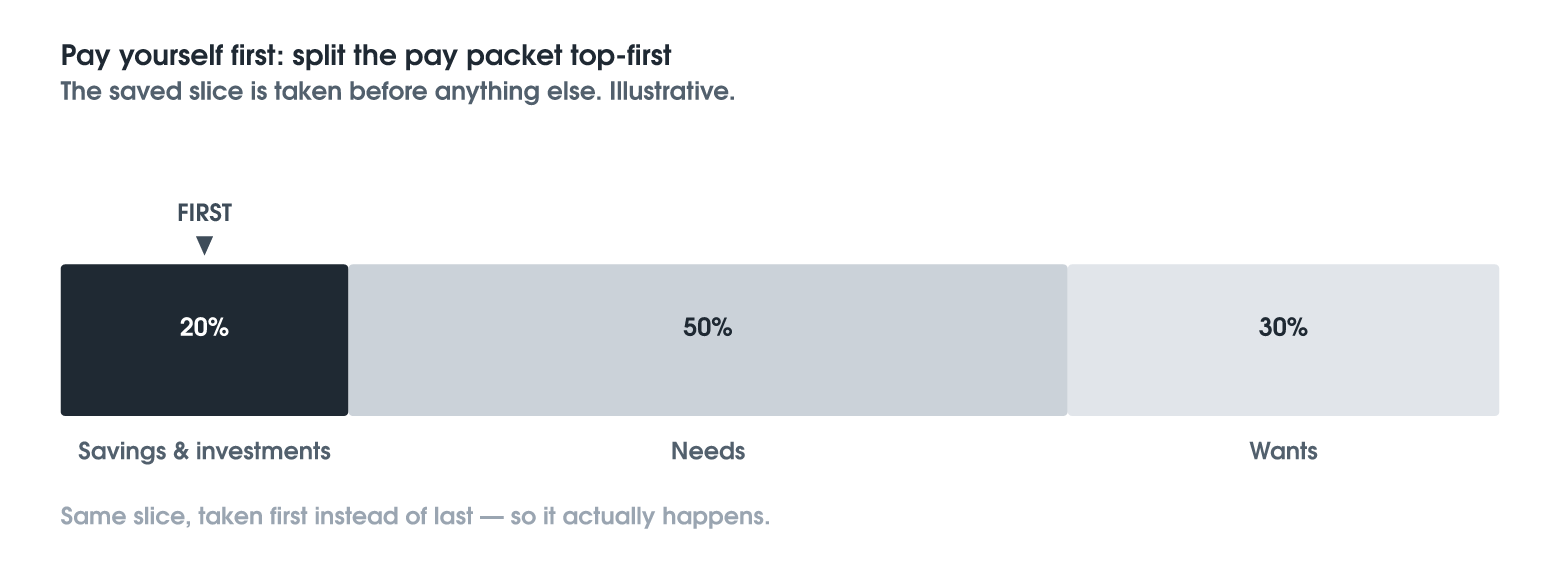
Illustrative example: top-first, not leftover
The chart shows one pay packet split top-first — a fixed slice to savings before anything else, then the remainder flowing to needs and wants. The saved amount is identical in size whether you take it first or last; the difference is that taken first, it actually happens. Start with a slice you will not miss, then nudge it up by a percentage point whenever your pay rises.
Educational only — not financial, tax, or investment advice, or a recommendation to take any particular course of action. Any names, figures, and examples illustrate a principle and are historical or simplified; past performance is not a reliable indicator of future results. Rules, tax treatment, and published figures change over time and may not reflect current policy. Wealth Diagnostics provides education and tools for financial advisers and their clients — seek licensed advice for your own circumstances before making any financial decision.